
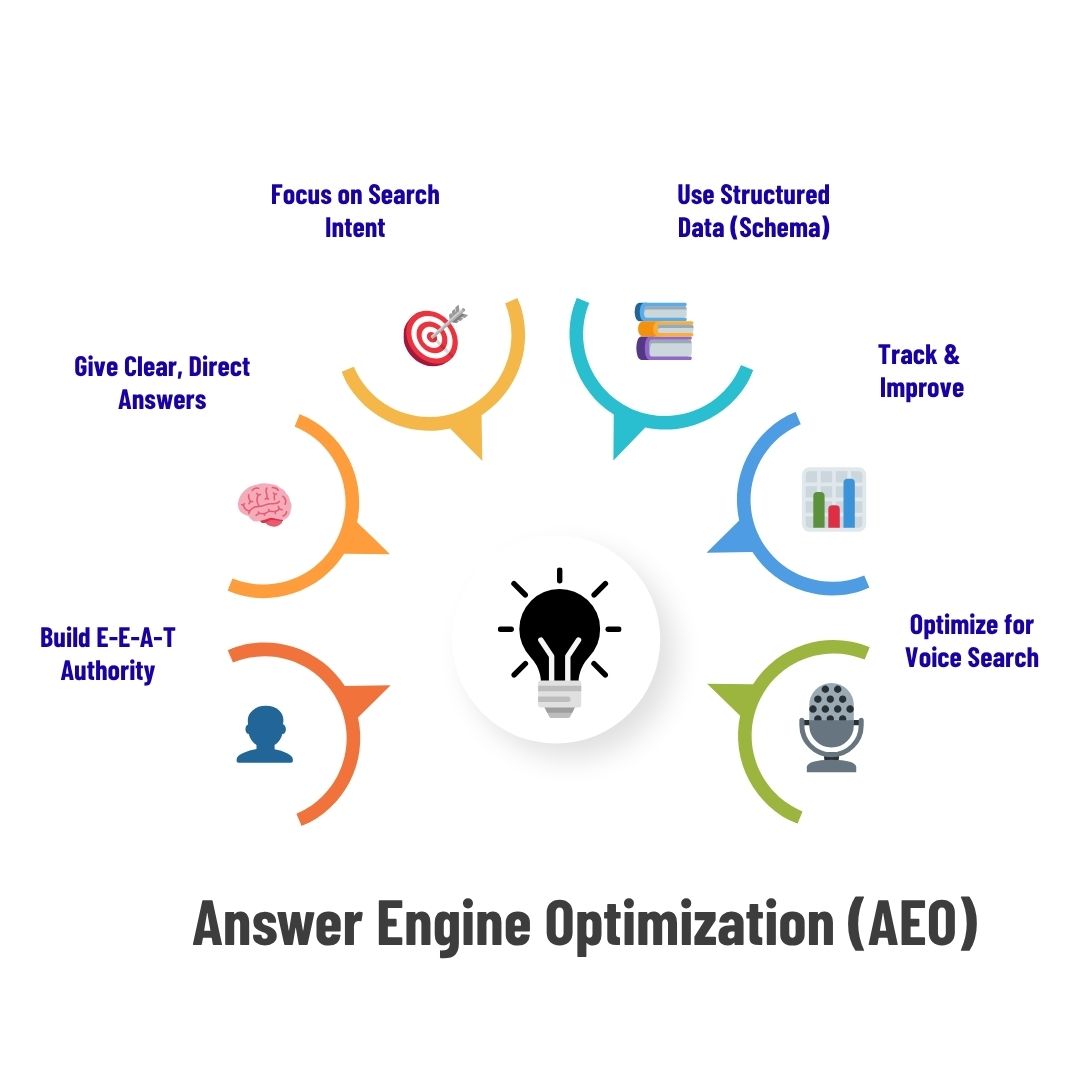
Answer Engine Optimization (AEO)

Answer Engine Optimization (AEO) Explained: How to Boost Your Visibility in 2026

The world of search is changing fast. Traditional SEO is no longer enough to guarantee visibility as AI-powered tools like ChatGPT, voice assistants, and answer engines redefine how users find information. Enter Answer Engine Optimization (AEO) — a modern approach designed to make your content the top choice for AI and answer-driven search results.

AEO ensures that your website doesn’t just rank in search results but provides direct answers that AI engines prefer. In 2026, understanding and implementing AEO can be the difference between being seen or being ignored online.

What Is Answer Engine Optimization (AEO)?

At DCROPMARK, we understand that the way people search for information is rapidly changing. Answer Engine Optimization is the process of structuring your website content so that AI-powered search engines can easily understand it and deliver it as a direct answer to users’ questions.

Unlike traditional SEO, which focuses mainly on keywords and ranking positions, AEO emphasizes clear, concise, and relevant answers that AI platforms can present instantly.

Examples of answer engines include Google’s featured snippets, voice assistants like Alexa and Siri, and advanced AI tools such as ChatGPT or Gemini. By implementing AEO strategies, DCROPMARK helps businesses ensure their content is not just visible in search results but is recognized as the preferred, authoritative answer for users.

What Is AI Search Optimization?

AI Search Optimization is the process of enhancing your website content and structure so that it can be effectively understood and prioritized by artificial intelligence–driven search engines. Unlike traditional SEO, which focuses primarily on keywords and backlinks, AI search optimization emphasizes context, intent, and relevance, helping AI systems deliver the most accurate and helpful results to users.

AI search optimization involves:
✍ Natural language content: Writing in a way that matches how people ask questions.
✍ Structured data and schema markup: Helping AI engines interpret your content accurately.
✍ User intent alignment: Creating content that satisfies the needs of searchers, not just keywords.
✍ Integration with AI platforms: Optimizing for tools like ChatGPT, Google’s AI search features, or voice assistants.

By implementing AI search optimization, businesses can improve visibility in AI-powered search results, increase engagement, and stay ahead of competitors as AI continues to reshape online search.
Answer Engine Optimization (AEO)

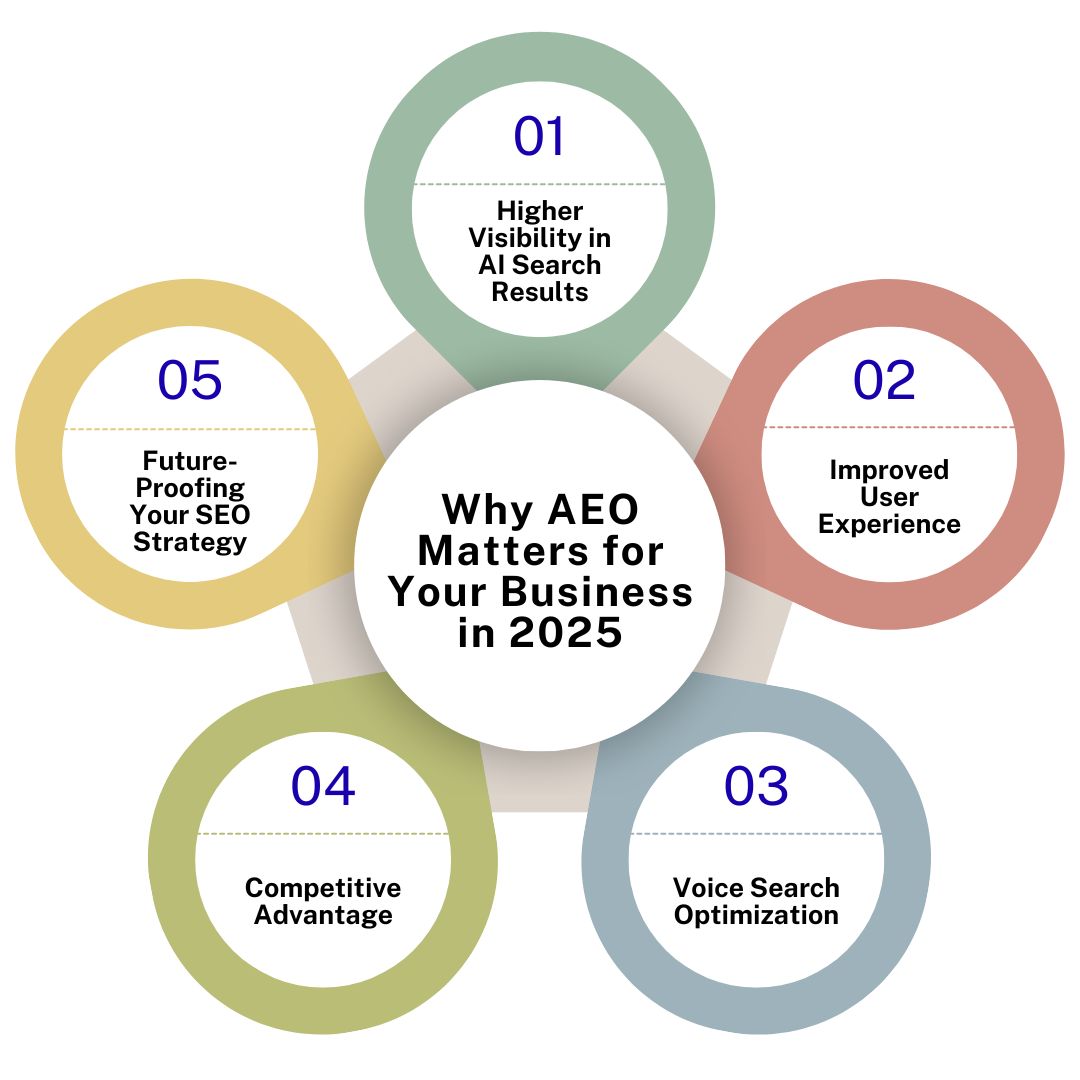
Why AEO Matters for Your Business in 2026

As we move deeper into the age of AI-driven search, Answer Engine Optimization (AEO) is becoming a critical component of online visibility. In 2025, businesses can no longer rely solely on traditional SEO to reach their audience — AI-powered tools and answer engines now determine which content is presented as the “top answer.”

Here’s why AEO matters for your business:

✍ Higher Visibility in AI Search Results

AI search engines, including voice assistants and advanced AI platforms like ChatGPT, prioritize content that provides clear, accurate answers. Optimizing for AEO increases the chances that your website is selected as the preferred answer, driving more qualified traffic.

✍ Improved User Experience

AEO focuses on delivering concise, relevant information that meets the user’s intent. This improves engagement, reduces bounce rates, and builds trust with your audience.
Voice search optimization
Why AEO Matters for Your Business in 2025

✍ Voice Search Optimization

With the rise of smart devices and voice search, AEO ensures your content is easily readable by AI assistants, helping you capture voice-based queries that traditional SEO may miss.

✍ Competitive Advantage

Businesses that adopt AEO early gain a significant edge over competitors who rely only on traditional SEO, positioning themselves as authoritative and forward-thinking in their industry.

✍ Future-Proofing Your SEO Strategy

As AI continues to evolve, integrating AEO ensures your content remains relevant, discoverable, and optimized for new search technologies, making your online strategy more sustainable in the long term.
SEO trends 2025
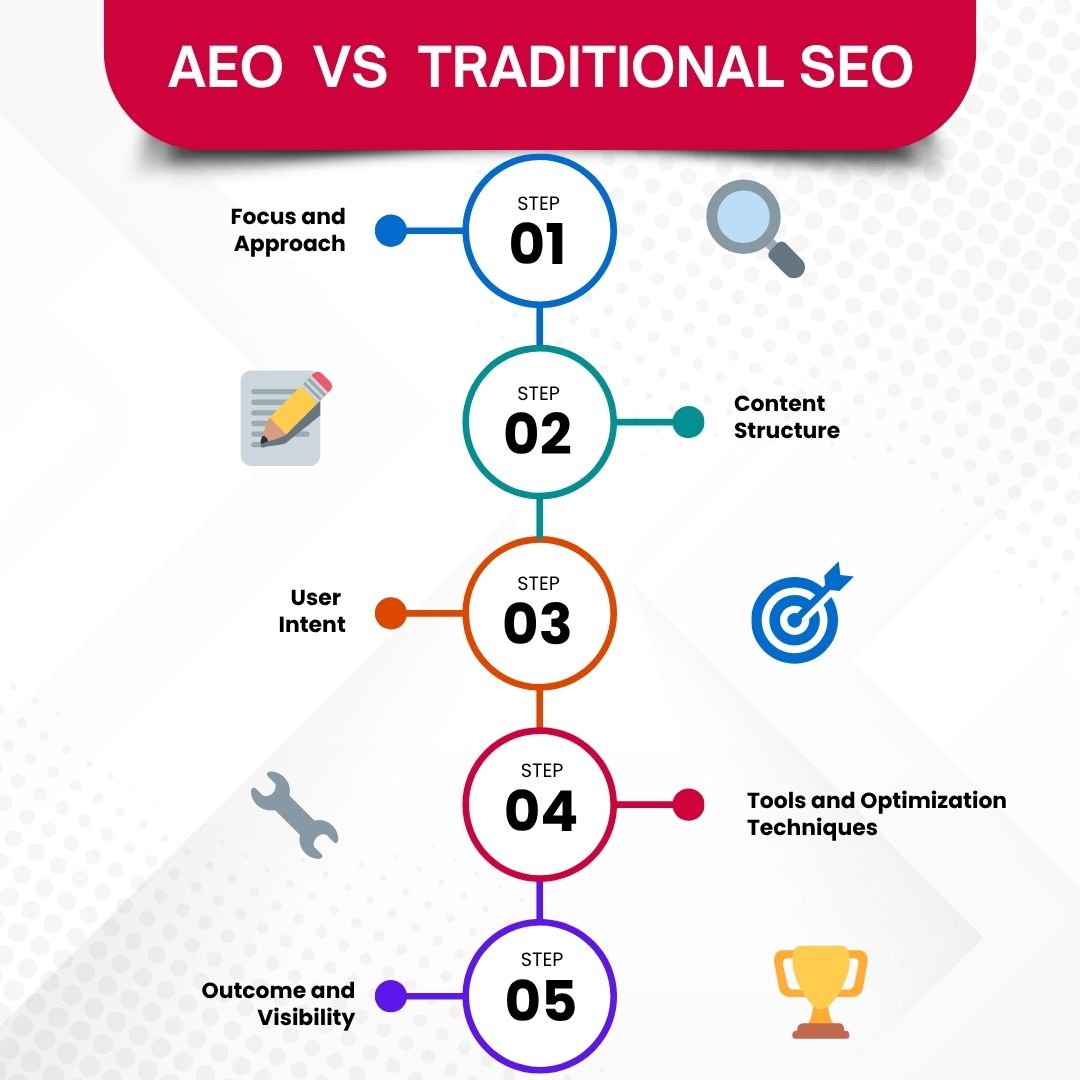
AEO vs Traditional SEO

AEO vs Traditional SEO: Key Differences Every Marketer Should Know

1️⃣ Focus and Approach

Traditional SEO : Focuses mainly on keywords, backlinks, and ranking positions in search engines. Its main goal is to drive traffic by appearing in search results.

AEO : Prioritizes providing direct, clear answers that AI-powered platforms such as Google’s featured snippets, ChatGPT, or voice assistants can deliver instantly. The aim is not just ranking but being the chosen answer.

2️⃣ Content Structure

Traditional SEO : Often emphasizes longer, keyword-heavy content optimized for search engine algorithms.

AEO : Requires concise, structured content that AI systems can easily interpret. Using short paragraphs, headings, and bullet points improves comprehension and selection by AI.

3️⃣ User Intent

Traditional SEO : Concentrates on keyword relevance, sometimes missing the deeper intent behind a search query.

AEO : Focuses on understanding user intent and delivering exact answers that fulfill the user’s needs, making content more valuable.

4️⃣ Tools and Optimization Techniques

Traditional SEO : Relies on keyword research tools, backlink analysis, meta tags, and page speed optimization.
AEO : Uses structured data (schema markup), FAQ sections, conversational content, AI-friendly keywords, and voice search optimization.

5️⃣ Outcome and Visibility

Traditional SEO : Your page appears in search results, and clicks depend on ranking position.
AEO : Your content can be selected as a featured snippet or voice answer, increasing authority, click-through rates, and AI-driven traffic.

Key Strategies for AEO Success

AEO Content Writing

Create short, clear, and actionable sentences that directly answer common user questions. Focus on clarity and readability for both humans and AI.

Voice Search Optimization

Use natural, conversational language that mirrors how people ask questions verbally. This boosts performance in voice assistants, and Google Assistant.

Structured Data

Implement schema markup, FAQs, and HowTo structured data to help AI platforms understand your content and improve visibility in featured snippets.

AI-Friendly Keywords

Target question-based queries and long-tail phrases that reflect real user intent, ensuring your content is discoverable in AI-powered search results.

🔧 Tools and Resources to Improve Your AEO

Optimizing your content for Answer Engine Optimization (AEO) requires the right tools and resources to ensure AI-driven search engines can easily understand and feature your content.

🖥️ AI Content Tools :
Platforms like ChatGPT, Jasper, and Surfer SEO help create AI-friendly content, answer user questions effectively, and optimize for AI search engines.

📄 Structured Data & Schema Plugins :
Tools like Yoast SEO, RankMath, or Schema Pro allow you to add FAQ, HowTo, and other schema markups for better AI comprehension and featured snippet eligibility.

📊 Monitoring & Analytics Tools :
Use platforms such as SEMRushAhrefs, and Google Search Console to track your rankings, featured snippets, and AI search visibility.

🗣️ Voice Search Testing Tools :
Tools like AnswerThePublic or Voice Search Readiness Testers help optimize content for natural language queries and smart assistants.

Combining AI content creation with structured data and voice search optimization ensures your website is fully AEO-ready, improving visibility, engagement, and authority in 2026.

Answer Engine Optimization (AEO)

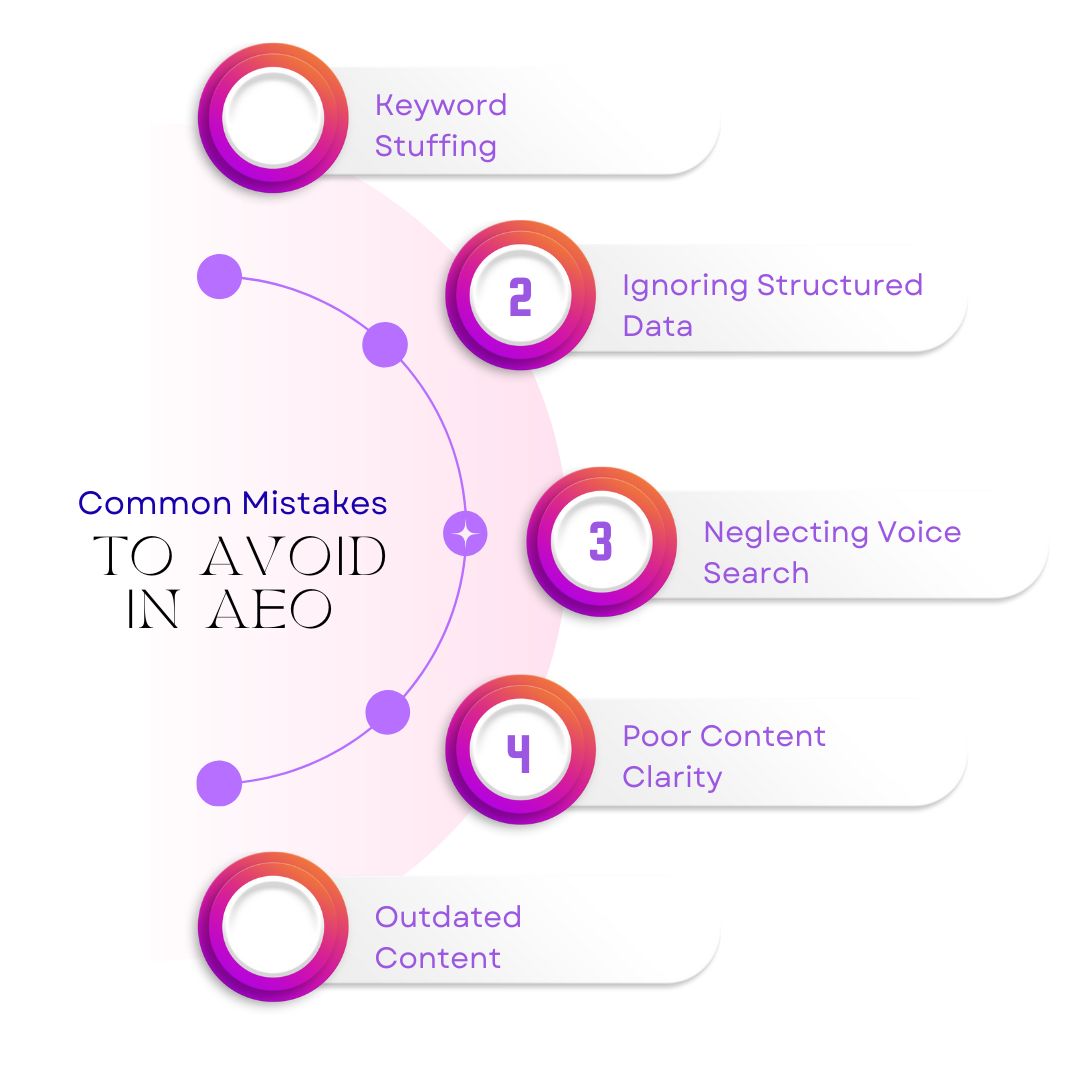
❌ Common Mistakes to Avoid in AEO

Optimizing for Answer Engine Optimization (AEO) is essential for 2025, but many businesses make avoidable errors that limit their AI search optimization and voice search optimization performance. Here are the most common mistakes:

🗒️ Keyword Stuffing : Overloading content with keywords reduces readability and weakens AI search optimization. Use natural, conversational language instead.

🏷️ Ignoring Structured Data : Not adding schema markup, FAQ, or HowTo data lowers your chances of appearing in featured snippets SEO results.

🗣️ Neglecting Voice Search : Focusing only on typed queries can hurt voice search optimization. Optimize for conversational, question-based phrases.

✨ Poor Content Clarity : Long, vague answers make it harder for AI to understand your content. Short, clear, and direct answers improve Answer Engine Optimization (AEO).

🔄 Outdated Content : AI search engines prioritize fresh, accurate information. Keep your content updated to stay relevant with SEO trends 2025.

Answer Engine Optimization (AEO)
Common Mistakes to Avoid in AEO

Final Thoughts: AEO Is the Future of Search 🚀

As digital behavior shifts and SEO trends 2026 highlight the rise of conversational search, Answer Engine Optimization is quickly becoming a must-have strategy for brands aiming to stay visible in an AI-driven world. Modern platforms depend heavily on AI search optimization, rewarding content that is clear, structured, and genuinely helpful.

This evolution also elevates the importance of Featured snippets SEO, where concise and well-formatted answers are more likely to be surfaced across AI tools and smart assistants. And with the rapid growth of Voice search optimization, businesses must create content that mirrors natural human questions and delivers instant clarity.

The future of search isn’t about ranking — it’s about being chosen. By embracing AEO today, your brand stays relevant, discoverable, and trusted as the search landscape continues to transform.
Back to top